
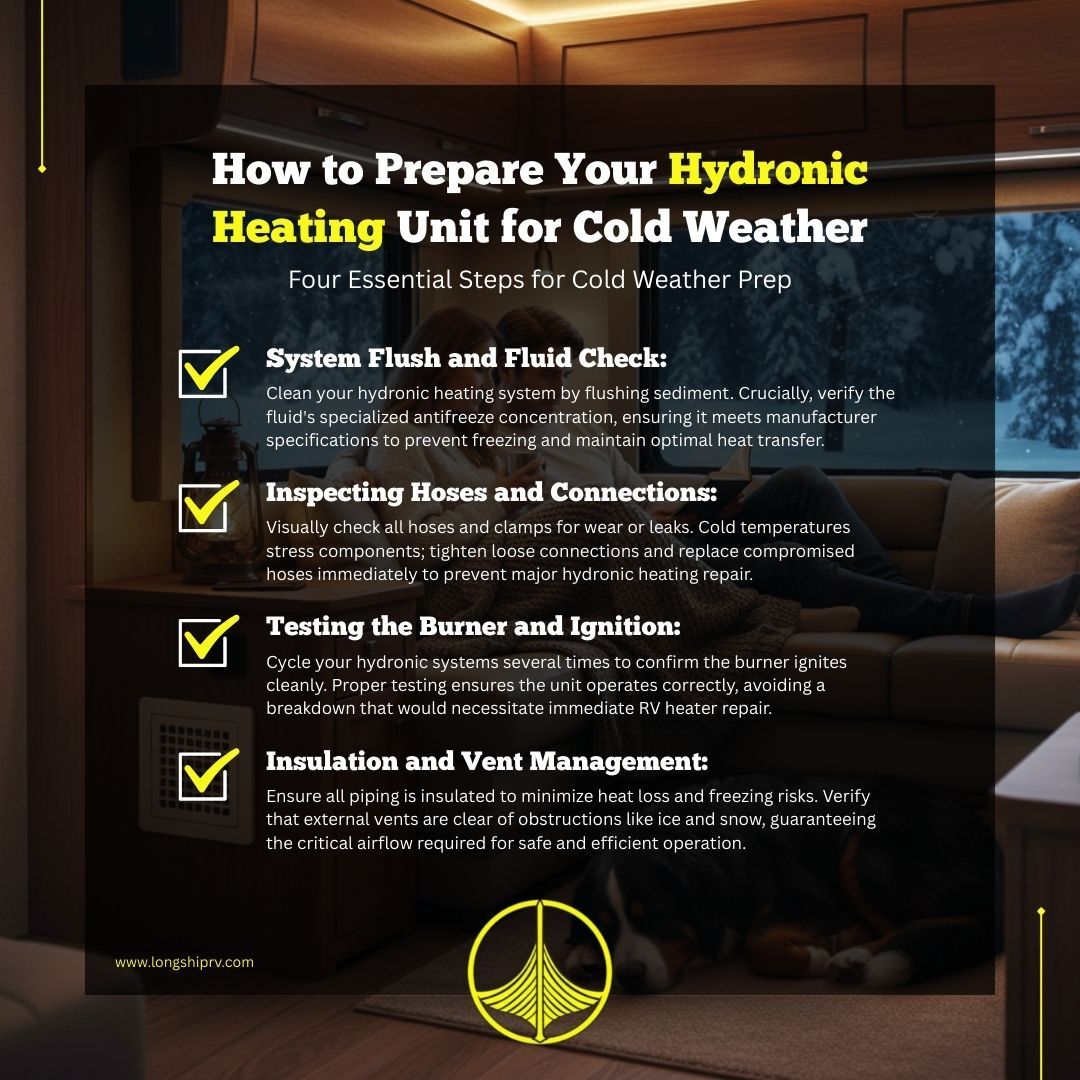
Hydronic heating systems are essential for comfortable winter RVing. At Longship RV, we know that proper, proactive preparation is the key to avoiding costly hydronic heating repair during cold months. Taking these specific, proactive steps ensures your heating unit functions efficiently and reliably throughout your entire winter season when you need it most.
How to Prepare Your Hydronic Heating Unit for Cold Weather
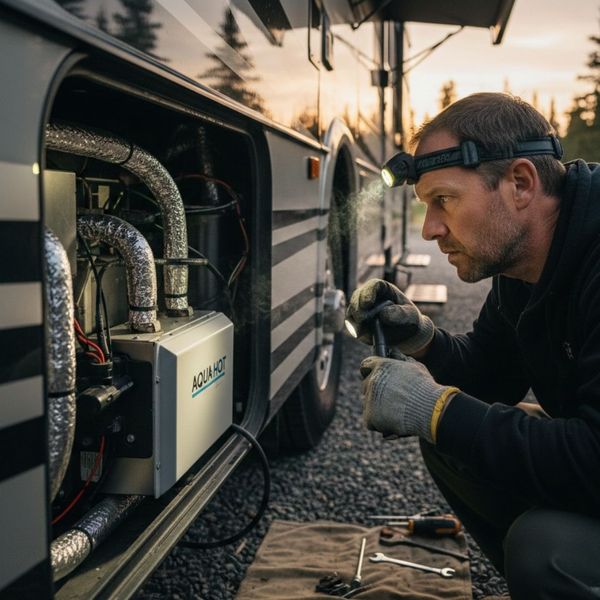
System Flush and Fluid Check
Start by ensuring your hydronic heating system is completely clean. A routine flush removes sediment and accumulated buildup that can significantly impede performance and overall efficiency. Crucially, you must check the level and concentration of the specialized fluid. This fluid, a vital mix of antifreeze and water, must be within the manufacturer's recommended ratio to prevent internal freezing damage and maintain optimal heat transfer throughout the RV.
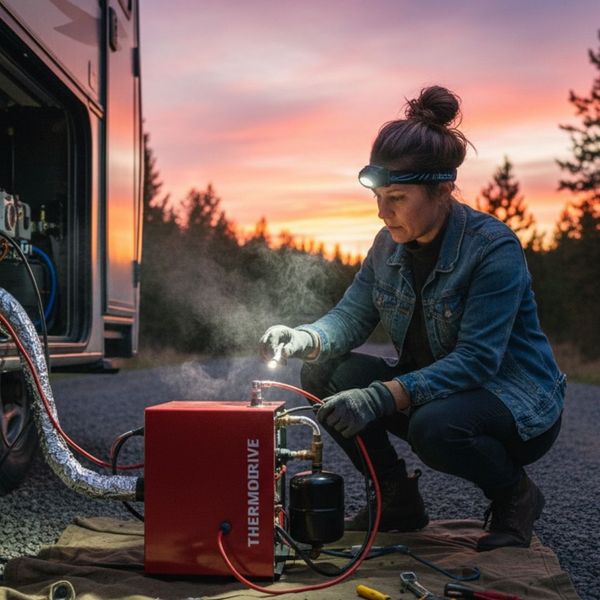
Inspecting Hoses and Connections
Visually inspect all hoses, clamps, and connections for any signs of wear, cracking, or potential leaks. Cold weather can quickly exacerbate minor imperfections and lead to outright system failures. Tighten any loose clamps and replace any compromised hoses immediately. Preventing leaks now is far simpler and less expensive than addressing a major hydronic heating repair on the road, especially when facing freezing temperatures.
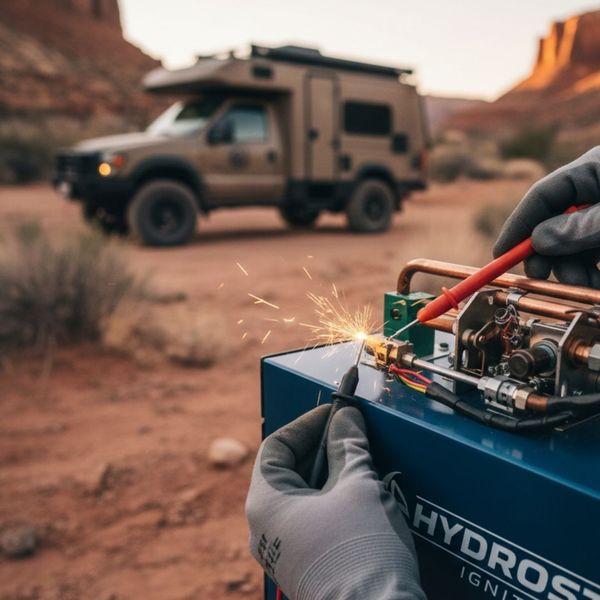
Testing the Burner and Ignition
The burner and ignition components are the operational heart of your reliable hydronic systems. Before severe cold hits, cycle the unit several times to confirm the burner ignites quickly and cleanly. Listen for unusual noises and verify that the heating process starts and stops correctly and consistently. A fault in the ignition system will render your entire unit useless when you need heat, necessitating professional RV heater repair.

Insulation and Vent Management
Ensure all exposed piping and the heating unit itself are adequately insulated. This critical step minimizes heat loss, helps the system maintain efficiency, and protects sensitive components from freezing temperatures. Also, check that external vents are clear of obstructions like snow, ice, or debris, which can block necessary airflow and cause the unit to shut down or fail. Proper ventilation is critical for safe and efficient operation.
Preparing your hydronic heating unit is a simple yet vital investment in your winter RVing comfort and the long-term longevity of your system. If you encounter issues during your inspection or require professional maintenance, the experts at Longship RV are here to help. Visit longshiprv.com or call us to schedule your pre-winter checkup today.